Hiring a car: the papers at the counter
Most car-hire problems start in the ten minutes at the counter. A card in the wrong name, an unsigned damage sheet or a missed border clause can cost far more than the hire itself.
- Full driving licence and any international permit
- Credit card in the main driver's name
- Booking confirmation showing what is included
- Photos or video of the car at pickup
- Written permission for any border crossing
first
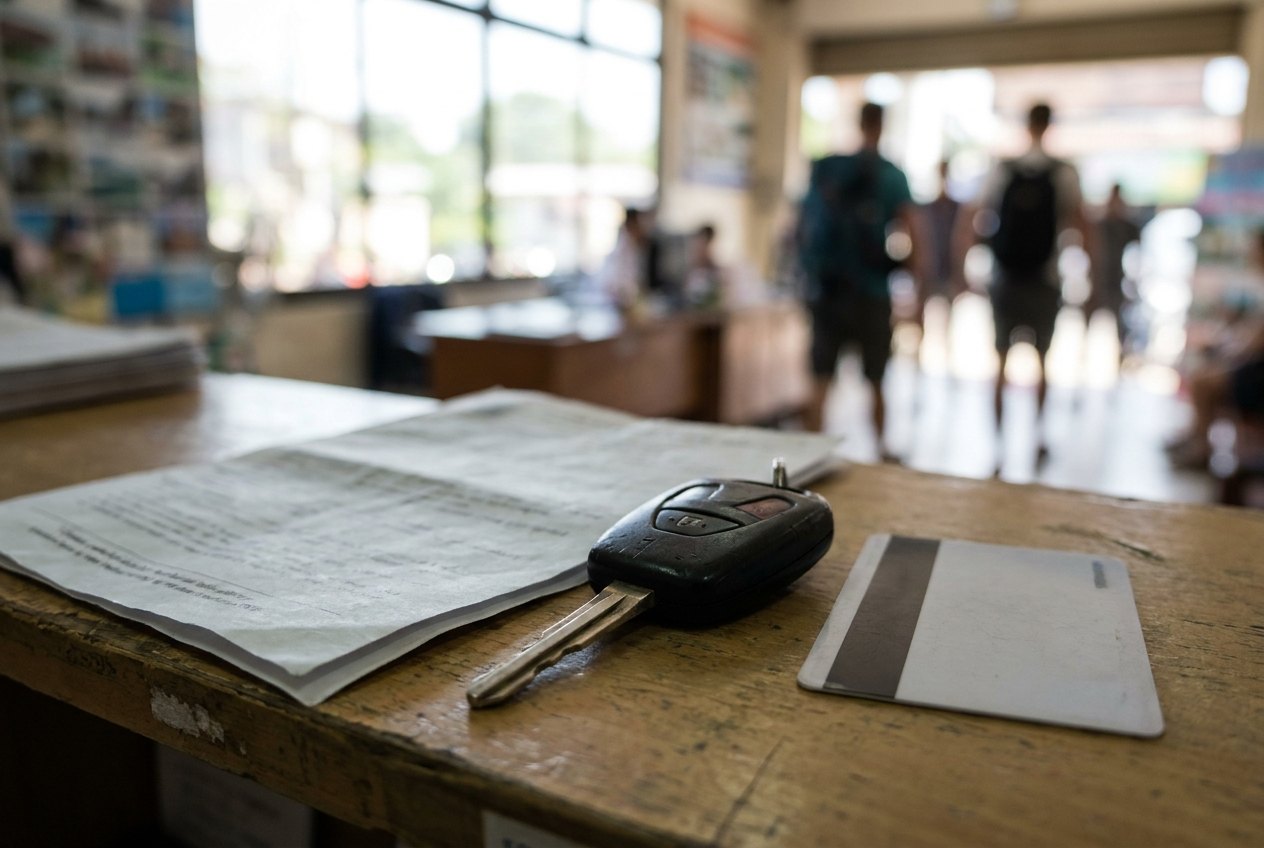
A car hire is a short contract, and the counter is where you sign it. The papers you bring decide whether you get the car; the papers you sign decide what you pay when you bring it back. Both deserve more attention than a tired traveller usually gives them after a flight.
The licence and what goes with it
The main driver and every additional driver need a full driving licence, valid for the whole rental. Many companies set a minimum time since the licence was issued, and many set age limits, with extra charges for younger or older drivers. These are company rules rather than law, and they differ.
If your licence is not in a form the local authorities read, or the country requires one, carry an international driving permit as well. Some desks ask for it and some do not, but the police can, whatever the desk said.
Every person who will drive must be named on the agreement and usually present at the counter with their own licence. A driver who is not named is often not covered at all, so a quick turn at the wheel by a companion can cost the whole value of any damage. Additional drivers often carry a daily charge; read it in the terms rather than leaving one off to save it.
Most desks also want a passport or identity card, and some ask for proof of a return journey or a home address. Photocard licences from some countries come with a separate record of endorsements; if yours does, check whether the company wants a code or printout before you travel.
The card and the deposit hold
Many companies require a credit card in the main driver's name, and some do not accept debit cards, prepaid cards or a card belonging to someone else. The reason is the deposit. The company places a hold on the card for a sum that covers the excess, fuel and possible charges, and releases it after you return the car.
A hold is not a payment, but it uses up your credit limit for the length of the rental and some time after. If the limit is too low, the counter can refuse the hire. Check the deposit amount in the terms and the available limit on your card before you leave home.
Release times differ by company and by bank. If a hold is still showing weeks after the return, ask the company first, then your card issuer.
Cover and the excess
A hire usually includes basic cover with an excess: the amount you pay towards damage or theft before the cover takes over. The counter often offers extra products that reduce that excess, sometimes to nothing. Whether you need them depends on what you already have, such as a separate excess policy or cover through travel insurance.
Read what is excluded. Tyres, glass, the underside of the car, the roof and keys are often outside the basic cover, as is damage caused while breaking the terms, such as driving on an unpaved road or into a country not allowed. The logic of reading a policy applies here just as it does to travel insurance. See also slip I-02Medical cover abroad, in plain terms
The inspection sheet and your own photos
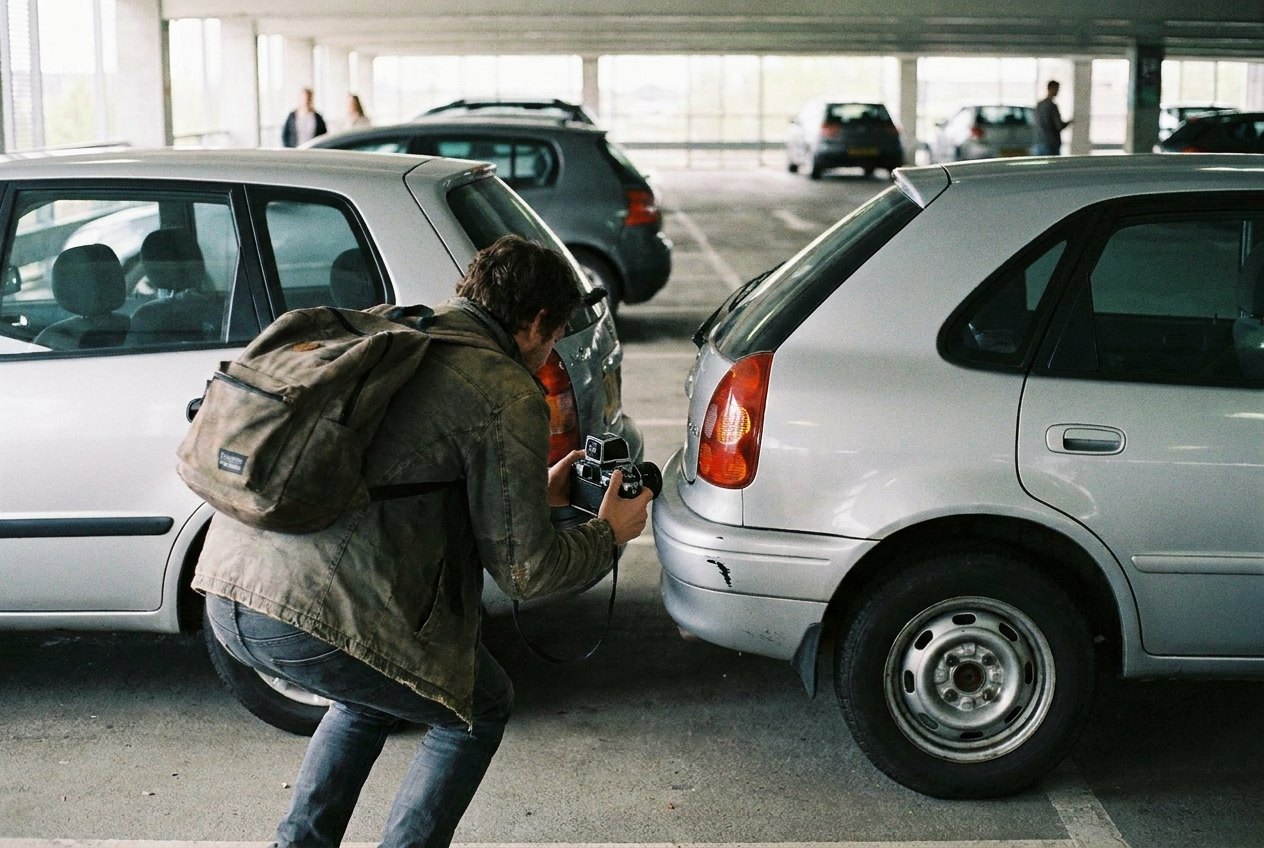
Before you drive away, you are usually given a sheet or a screen showing existing damage. Walk round the car and compare. Any scratch, dent, chip or scuff that is not marked should be added and signed by staff before you leave, not after.
Take photos or a video of every side of the car, the wheels, the windscreen, the interior, the fuel gauge and the mileage, with the time and date visible. Do the same when you return it, especially if you drop the keys out of hours with no one to check the car with you. Keep these until the deposit is released and any later charge is settled.
A worked example: if you collect the car on 12 April and return it on 19 April, the photos from 12 April are your only proof that a scrape on the rear bumper was already there. Without them, it is your word against the company's record.
Borders, ferries and one-way hires
Many hire agreements limit where the car may go. Some countries are allowed, some need advance permission and a fee, and some are excluded. Taking a car onto a ferry may also need permission. Driving into a country not allowed can void the cover entirely.
Ask for any permission in writing, on the agreement itself. Check also whether the car carries what each country requires, such as a vignette or toll tag. The rules on vignettes and tolls change at each border, and a car hired in one country usually covers only that country's system.
A one-way hire, especially across a border, often carries a separate fee. Read it before you book rather than at the counter.
Fuel and the return
Fuel policies vary. Under a full-to-full policy you collect the car with a full tank and return it full; if you do not, you are charged for the missing fuel, often at a high rate plus a fee. Other policies charge you for a full tank at pickup, with or without a refund for fuel you return. Choose knowingly and keep the receipt from the last fuel stop near the return point.
Parking and speeding fines, and unpaid tolls, can reach the company long after you have flown home. The company usually pays or passes on your details to the authority, then charges your card for an administration fee. Keep the agreement and receipts for some months after the trip so that you can match any later charge to the dates of your hire.
At the return, ask for a signed check-in sheet showing no new damage and the fuel level. If no one is there, your photos take its place.
The rental terms are the contract, and they differ by company and by country. Read them before you pay, and check the local road authority's rules on licences and permits before you drive.