Seat reservations on top of a pass
A rail pass lets you on many trains, but not always into a seat. High-speed, night and some international trains ask for a reservation first, and those can sell out.
- Each train number, date and departure time
- Whether that train requires a reservation
- Your pass type and class
- Confirmation for every reservation bought
first
credit
Threecharlie
CC BY-SA 4.0
A rail pass answers the question of fare. A reservation answers the question of seat. On many trains in Europe you need only the first. On others, the railway will not let you travel without both, and the reservation has to be bought separately, often for a fee and sometimes from a limited supply.
Knowing which trains belong to which group is most of the work. The rest is buying in good time.
Optional, compulsory and the space between
Reservations come in three kinds. On many regional and some long-distance trains they do not exist: you board and sit where there is room. On others they are optional: you may reserve a seat for comfort, but you can also travel without one. On a third group they are compulsory: the train is sold seat by seat, and a ticket or pass without a reservation does not entitle you to travel.
The same country can have all three. A domestic intercity train may be optional while the high-speed train on the same line is compulsory. The timetable or the railway's own journey planner usually marks which applies to each train, and the pass issuer publishes its own list. Read the train, not the route.
credit
Deejay.Enjoyer76
CC BY 4.0
Trains that usually ask for one
Check first, but these groups often need a reservation for pass holders:
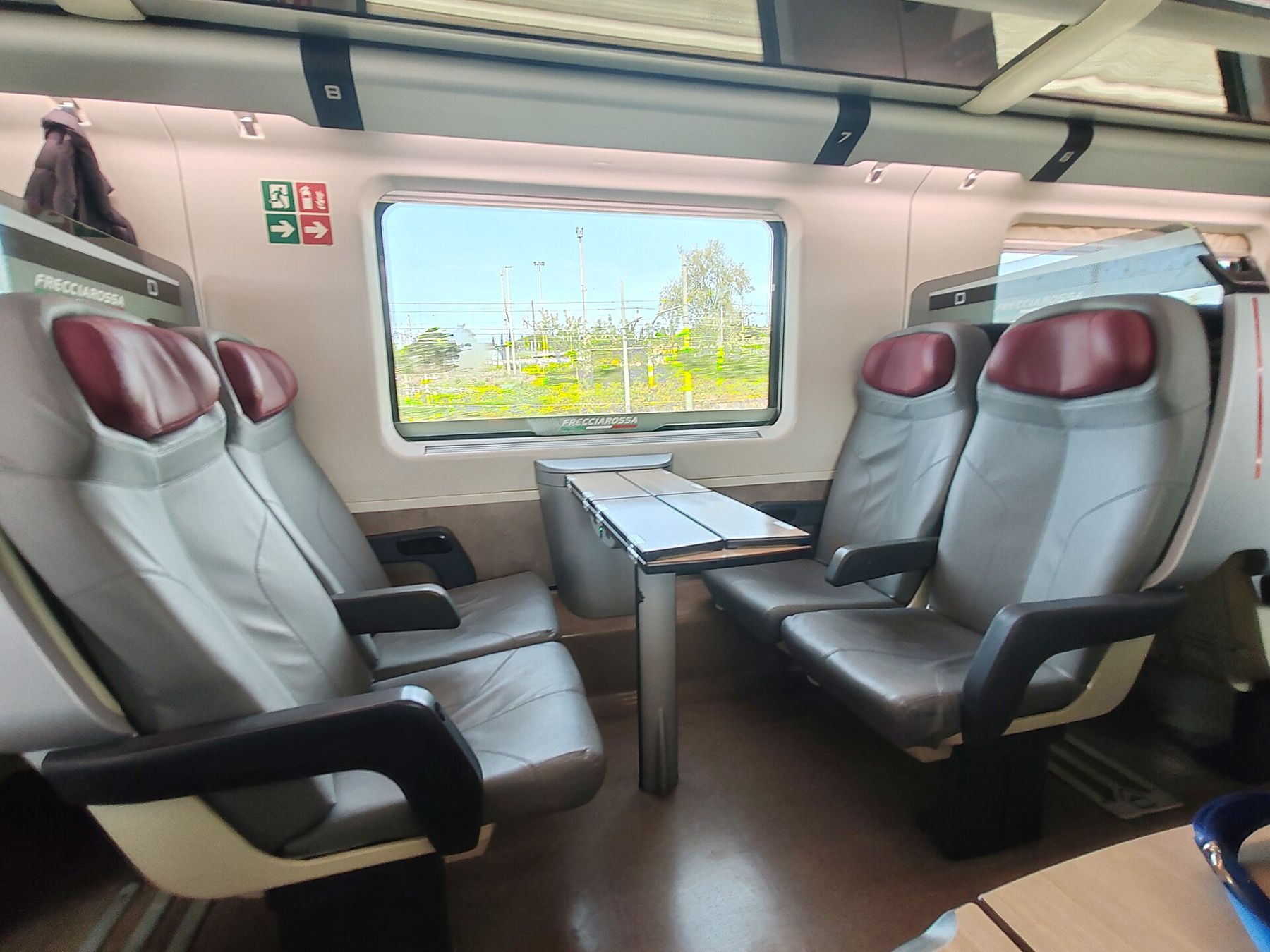
- most high-speed trains in France, Italy and Spain
- night trains, where the reservation is for a seat, couchette or berth
- many international trains, including those through the Channel Tunnel
- some scenic and panoramic trains, even in countries where ordinary trains need none
In other countries, such as Germany, Austria and Switzerland, many long-distance trains can usually be boarded with a pass alone, with a reservation optional. Busy days still fill trains, and a reserved seat can be worth having on a holiday weekend. Rules change from timetable to timetable, so look at each train you plan to take.
Night trains deserve their own note. The reservation is usually for a type of place, such as a seat, a couchette in a shared compartment or a bed in a sleeper, and each costs more than the last. A pass covers the fare, but the place is always extra. Sleeper and couchette places on popular routes can sell out weeks ahead, especially in summer and at holiday times.
The sum of pass against tickets should include every compulsory reservation you meet. See also slip D-01The international driving permit, explained
Quotas for pass holders
On some compulsory-reservation trains, only a set number of seats are open to pass holders. The rest of the train may be on sale to ordinary ticket buyers at the same moment, so a train can be "full" for you while seats are still offered to others.
The logic is commercial. The railway receives a share of the pass price rather than a full fare, so it limits how many seats pass holders can take on its busiest trains. Quotas are usually smallest on the most popular routes and at peak times.
When the quota is gone you have three choices: take another train, buy an ordinary ticket for that train, or travel on slower trains that need no reservation. The last option often works well and costs nothing extra, at the price of time.
Where reservations are sold
Reservations are usually sold through one or more of these:
- the railway's own ticket offices at stations
- the railway's website, for some trains and some passes
- the pass issuer's own booking service
- ticket machines, on a few networks
Not every channel sells every reservation. Some pass-holder seats can be booked online only through the issuer, and some only at a station in the country that runs the train. Fees differ by channel. Start with the railway that runs the train and the pass issuer's guidance, and compare.
Some reservations are printed on paper, some are sent as a code to show on a phone, and some are recorded against the pass itself. Check what the railway expects you to show, and make sure the reservation is readable without a mobile signal, because trains often run through tunnels and remote country.
The booking window opens months ahead on many routes and later on others. For night trains and popular high-speed routes in summer, book as soon as your dates are fixed.
Boarding without one
On a compulsory-reservation train, boarding without a reservation is travelling without a valid ticket. Depending on the railway, you may be refused at the gate, charged a fare on board, or fined. Staff rarely have discretion here, because the seat you are sitting in has been sold to someone else.
On an optional-reservation train, the risk is smaller but real: you may stand, or be asked to move from a reserved seat when its holder arrives. Seat displays above the seats or on the doors often show which seats are reserved and between which stations.
Keeping the slips straight
Each reservation names a train, a date, a coach and a seat. Keep them with the pass and your passport, and check the details against the pass record before each journey. A reservation for the wrong date is worth nothing to the inspector.
If a train is cancelled or late, the reservation does not usually move to the next train by itself. Ask staff at the station what the railway allows. If a missed connection costs you a booked night or onward journey, your disruption cover may help, but only within its terms.
The railway that runs each train has the final word on its reservation rules, and the pass issuer on what the pass includes. Check both before you travel.