Visa, visa-free, e-authorisation: the difference
Entry permissions come in several forms, from a sticker in your passport to an online approval linked to its number. Each one answers a slightly different question at the border.
- Your nationality and passport type
- Purpose and length of the trip
- Every country you will enter or transit
- Approval reference number and printout
- Passport number used for the application
first

credit
Matti Blume
CC BY-SA 4.0
Before you travel, the country you are visiting wants to answer two questions: may this person come, and on what terms. The form your answer takes depends on your nationality, the purpose of the trip and the length of the stay. The names vary from one government to the next, but most permissions fall into five families.
None of them is a guarantee of entry. In almost every country the final decision is made by the border officer on the day, who can ask about your plans, your money and your return.
A visa in the passport
The traditional visa is a sticker or stamp placed in your passport by an embassy or consulate before you travel. You apply in advance, usually with forms, photos, supporting documents and a fee, and sometimes an interview or fingerprints. The visa states its type, its validity dates and often the number of entries allowed.
The dates on a visa can mislead. The validity period is the window in which you may enter; it is not always the length of stay you are allowed. Many countries decide the permitted stay at the border, and record it in a stamp or a digital record. Read both.
Some visas are single-entry, so leaving and coming back, even for a day trip across a border, uses them up. If your route crosses in and out of a country, check whether you need a double or multiple-entry visa.
A visa can also carry conditions written on it, such as the purpose of the visit or a named employer or university. Those conditions travel with you to the border. If your plans change after the visa is issued, ask the embassy whether the visa still fits before you set off.

credit
Matti Blume
CC BY-SA 4.0
E-visas and visas on arrival
An e-visa is still a visa, but the application, payment and approval happen online. The approval is a document or a record linked to your passport number, and you are usually told to carry a printed or digital copy. Treat it with the same care as a sticker visa: the details must match your passport exactly, and a typing error can make it useless.
A visa on arrival is issued at the border itself, often at a desk before passport control. Rules on which nationalities qualify, what you need to show and how to pay vary widely and change often. Some countries that once offered visas on arrival have moved to e-visas only. Check the official immigration site of the country before you rely on one, and remember that the carrier may still want proof before boarding.
Visa-free entry, and what it still asks of you
Many nationalities can visit many countries for short stays without a visa. Visa-free entry is a rule about what you need to apply for in advance, not a promise that anything goes. The limits remain:
- a maximum length of stay, sometimes counted across a period of months
- a limited set of purposes, usually tourism, family visits and some business meetings, but not work
- conditions you may be asked to prove at the border, such as a return ticket, accommodation details or enough money for the stay
Visa-free entry is a rule about what you need to apply for in advance, not a promise that anything goes.
Shared zones add a twist. In the Schengen area, for example, short stays are counted across all member countries together, and the rule on counting days applies whether you travel visa-free or on a visa. See also slip P-02Blank pages, damage and wear
Electronic travel authorisations
A growing number of countries ask visa-exempt travellers to obtain an electronic travel authorisation before they set off. It is not a visa; it is a pre-screening step. You answer questions online, pay a fee, and receive an approval linked to your passport. The main schemes you are likely to meet:
- ESTA, for travellers using the United States Visa Waiver Program
- eTA, required by Canada for many visa-exempt visitors arriving by air
- ETA, the United Kingdom's electronic travel authorisation for many visa-exempt nationalities
- ETIAS, planned for visa-exempt visitors to the Schengen area; check whether it has started before you travel
Most of these are valid for several years or until your passport expires, whichever comes first, and allow repeated short visits. Because they are linked to one passport, renewing your passport usually means a new application. Each scheme is run by its government, and each publishes its own official application page. Many unofficial websites offer to file the application for an extra charge; you never need to use them.

credit
ImagePerson
CC BY 4.0
Carriers check these authorisations at check-in, as they do visas, so an application left to the last minute can cost you the flight. Approval is often quick but not always; some applications are referred for review.
What happens at the border
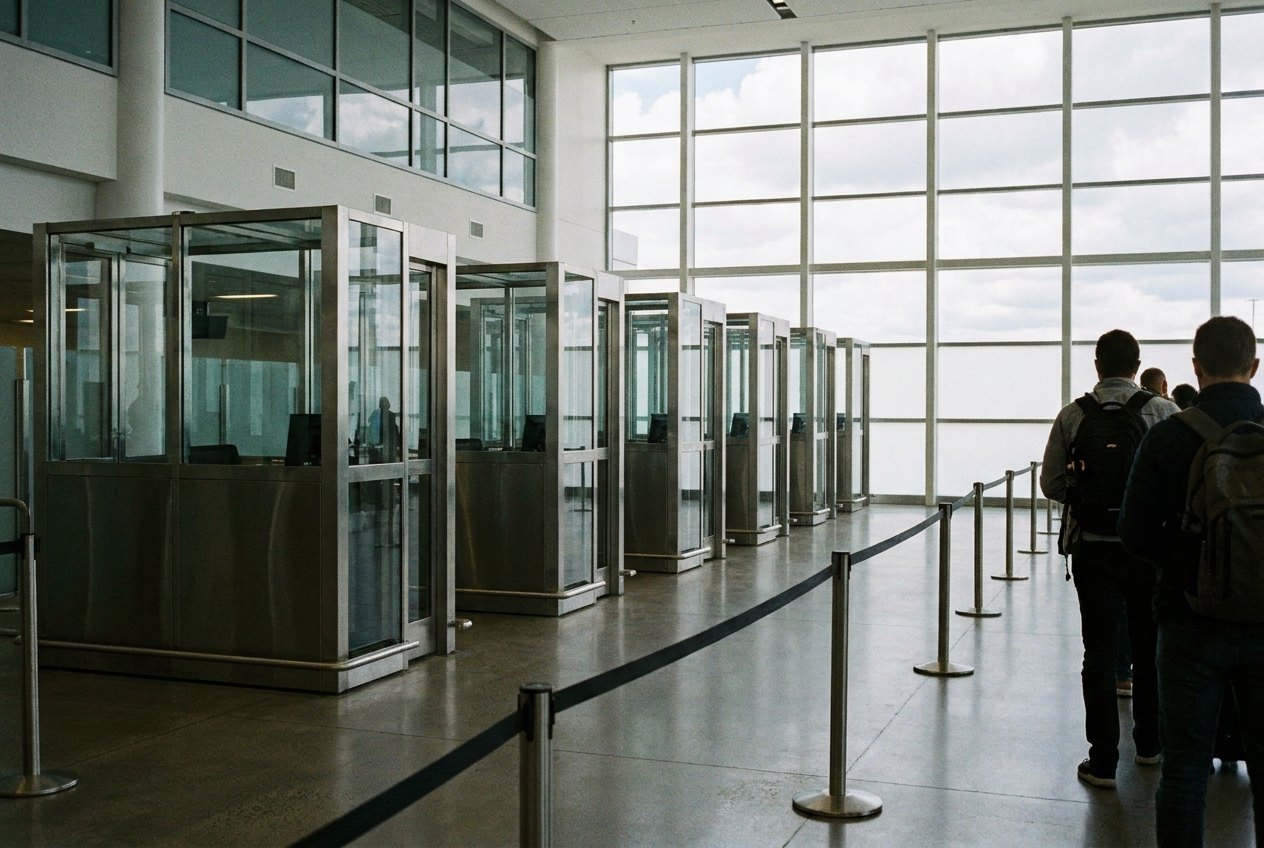
Whatever you hold, the border officer makes the final decision on the day. They may ask why you are visiting, where you are staying, how long you will stay and how you will pay for it. The answers should match the permission you hold: a tourist entry is not permission to work, and a short-stay authorisation is not permission to study for a year.
Several countries now record entries and exits digitally rather than stamping passports. In the Schengen area the EU Entry/Exit System does this for many non-EU visitors on short stays, which makes the count of your days exact.
Connections matter too. Some countries require a visa even if you only change planes, and some treat any stay outside the airport as an entry; see the rules for changing planes before you book a route with stops. Your passport itself has to meet validity rules for each country as well.
Finding the right permission for your trip
- Start from your nationality and the passport you will travel on. Dual nationals may get different answers for each passport.
- Find the official immigration authority of each country on the route, including transit stops.
- Match the purpose and length of your trip to the category it offers.
- Apply only through the official channel, and print the approval.
- Check again shortly before travel. Rules change, sometimes with little notice, and a new scheme can start between booking and departure.
Keep copies of everything. A printed approval, a screenshot of the reference number and a copy of the passport data page take up little room, and they help if a phone battery dies or a system is slow at the desk.
This is general information, not legal advice. The embassy, consulate or official immigration authority of the country you are entering decides what applies to you, so check with it each time.