Transit: when changing planes needs a visa
A connection can be invisible to the border or count as a full entry. Whether you stay airside, collect your bags or change airports decides which papers you need.
- Every stopover airport on the route
- Whether bags are checked through to the end
- One ticket or separate tickets
- Connection times, including any overnight stop
first
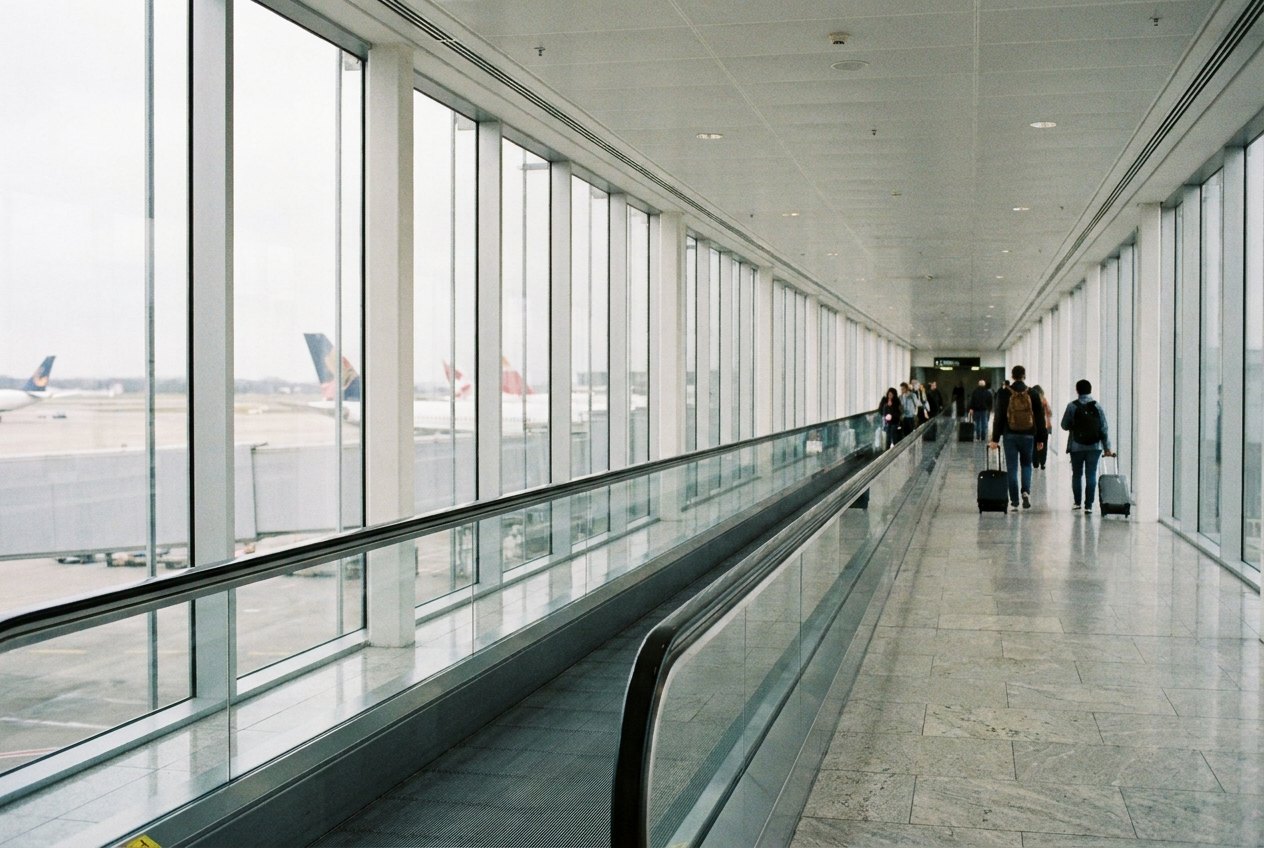
A connection looks like a gap between two flights. To the country where it happens, it can be either nothing at all or a full arrival. The difference lies in whether you stay airside, in the secure international area, or pass through immigration into the country itself.
That depends on the airport, the country's rules, your nationality and the way your tickets were booked. A route that works for one traveller can need a visa for another sitting in the next seat.
Airside and landside
Airside is the part of an airport beyond passport control. At many large hubs, passengers arriving on international flights can walk to their next gate without ever passing immigration: they have not entered the country. Landside is everything on the other side of the border check, including baggage reclaim, arrivals halls and the city beyond.
If you stay airside, many countries do not need you to hold a visa. If you need to go landside for any reason, you are entering the country and its normal entry rules apply. Not every airport has an airside connection, and not every terminal connects to every other one airside.
Airport maps and the airport's own website usually show whether a transfer route exists between two terminals without leaving the secure area. If the map sends you through arrivals, treat the connection as an entry.
Airport transit visas
Some countries require certain nationalities to hold a transit visa even when they never leave the airside area. The Schengen countries have a common airport transit visa for a list of nationalities, and some individual members add their own. The United Kingdom has a similar requirement for some travellers changing planes airside.
The reasoning is about control: a passenger who is refused onward boarding, or misses the connection, may end up asking to enter. The list of nationalities, and the exemptions for holders of certain visas or residence permits, change over time, so check the current rule for your passport.
Exemptions are common and worth reading closely. Holders of a valid visa or residence permit for certain other countries are often excused from an airport transit visa. The exact list matters, and an expired document does not count.
A few countries have no airside transit in the usual sense. In the United States, for example, passengers arriving on international flights go through immigration before connecting, so they need whatever entry permission an arriving visitor would need, such as a visa or an approved ESTA. Other countries have similar arrangements at some airports.
When your bags decide for you
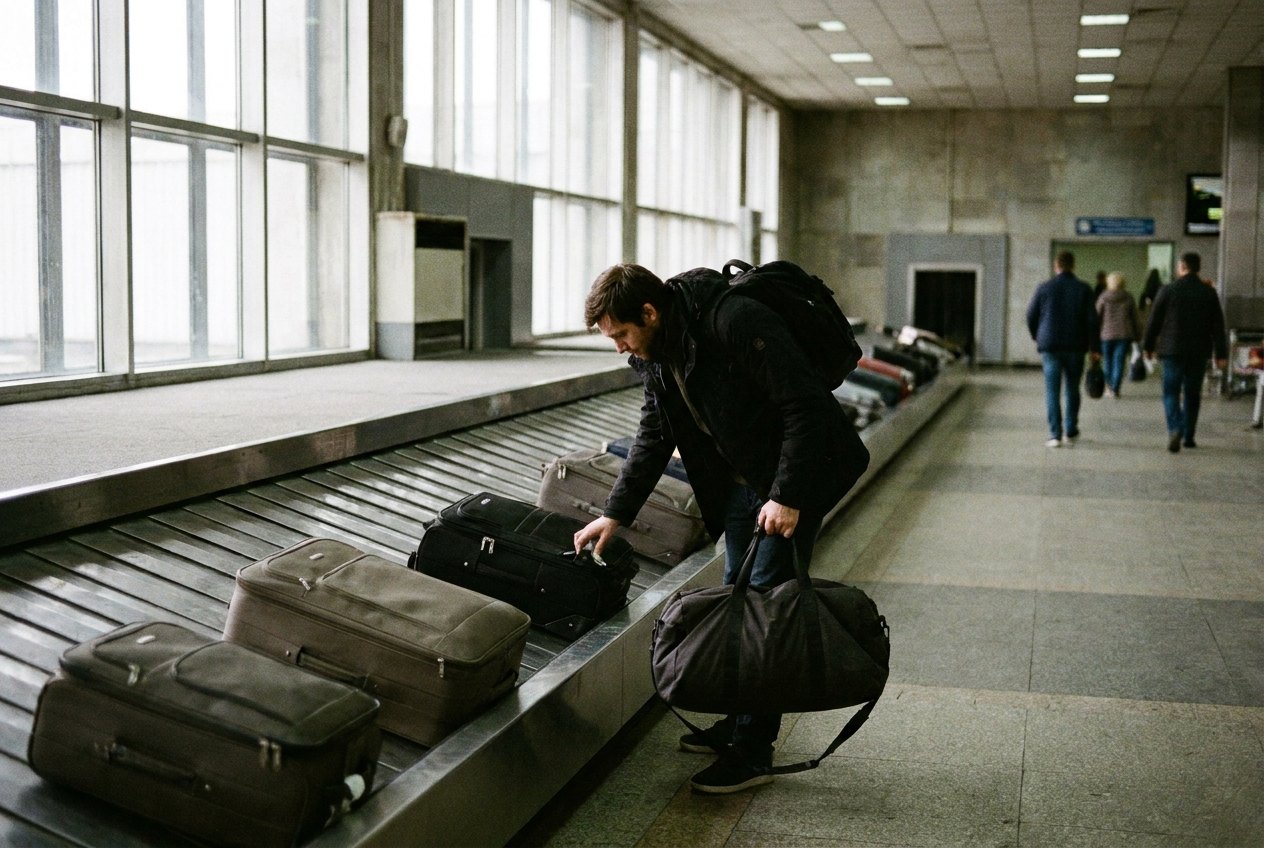
On a single ticket, checked bags are normally sent through to your final destination. On separate tickets, they usually are not: you collect them at the connecting airport, go landside, and check in again for the next flight.
That trip to the baggage hall takes you through immigration. A route that needs no visa on one ticket can therefore need one on two separate tickets. Some airports and some carriers have arrangements that avoid this, but you cannot assume them. See also slip V-02Counting days in a shared travel zone
The same applies to any change of terminal that has no airside link, and to changes of airport within the same city. Moving from one airport to another always means entering the country.
Self-transfer and separate tickets
Self-transfer means you build the connection yourself, often from two separate bookings. Besides the bag question, it carries a paperwork risk: if the first flight is late and you miss the second, the second carrier usually has no duty to rebook you, and you may need to stay in the connecting country while you sort it out. If you lack permission to enter, that becomes a serious problem.
It also affects your insurance and your passenger rights. Disruption cover and rules such as those set out in cancellation versus disruption treat a missed self-transfer differently from a missed connection on a single ticket. Read the terms before you rely on them.

Overnight and long connections
A long layover changes the picture. If you want to leave the airport to sleep, eat or see the city, you are entering the country and need whatever a visitor of your nationality needs. Some countries offer short transit visas or visa-free transit periods for passengers with an onward ticket, sometimes limited to certain airports or nationalities.
If you plan to stay airside overnight, check that the airside area stays open and that you are allowed to remain there. Some airports close parts of the airside area at night or ask passengers to go landside.
A worked example: you land at 22:00 and your next flight leaves at 09:00. If the transfer area closes overnight, you may be required to pass immigration to reach a hotel or even a landside waiting area. A route that needs no visa during the day can need one at night.
Checking a route before you buy
- List every airport where you change planes, on the outward and return legs.
- For each, find whether you can stay airside and whether bags go through.
- Check the transit rule for your nationality with that country's immigration authority.
- Check your passport against each stop's validity rules as well.
- If any stop needs a visa you do not have, change the route or apply in time.
Carry proof of your onward flight on paper as well as on your phone. Transfer staff and border officers may ask to see it, and some transit exemptions depend on it.
Rules on transit differ by nationality and change often. The immigration authority of each country where you change planes has the final word, so check with it before you book.