Counting days in a shared travel zone
For short stays, the Schengen countries count your days together, across a rolling window. The sum is simple once you see it, and easy to get wrong if you count by trips.
- Dates of every Schengen entry and exit
- Your planned dates for the next trip
- Passport issue and expiry dates
- Visa or travel authorisation, if you need one
first

credit
Nick-D
CC BY-SA 4.0
The Schengen area is a group of European countries that have removed routine passport checks at their shared borders. For visitors from outside it, that freedom comes with one combined allowance: a short stay is counted across the whole area, not country by country. Leaving France for Italy, or Denmark for Sweden, does not restart anything.
The rule itself is short, and well established, but check first: you may stay up to 90 days in any 180-day period. This slip explains what that sentence means in practice.
Who the count applies to, and where
The rule covers short stays by non-EU nationals, whether they need a visa or travel visa-free. Citizens of EU countries, and of Iceland, Liechtenstein, Norway and Switzerland, are not counted this way, and residence permits issued by a Schengen country follow their own rules.
Membership is not the same as EU membership. Some EU countries are outside Schengen, notably Ireland, and some non-EU countries are inside, such as Norway and Switzerland. The list has grown over the years, so check the current one before you plan. Days spent in a country outside the area do not count towards the 90.
Travel to a non-Schengen country in the middle of a trip, such as a week in Ireland or a ferry to a non-member state, pauses the count rather than resetting it. You leave the area, those days are not counted, and the count picks up again when you re-enter.
Some Schengen countries also have older bilateral agreements with particular non-EU countries that allow extra time. These are exceptions, they work differently from country to country, and they usually require you to prove where you were. Ask the embassy concerned rather than assuming one applies.

credit
Lars A
CC BY-SA 4.0
How a rolling window works
The 180 days are not a calendar half-year. They form a window that moves forward one day at a time. On any day you are in the area, or plan to be, look back over the 180 days ending that day and count how many of them you spent inside. The answer must not be more than 90.
A few points follow from that:
- Every part-day counts as a full day, including the day you arrive and the day you leave.
- Nothing resets on 1 January, on leaving the area, or on getting a new passport.
- Days only stop counting when they fall out of the back of the window, 180 days later.
It helps to think of each day you spend inside as a counter that stays on your record for 180 days and then drops off.
A worked example with invented dates
Suppose you enter on 1 March and leave on 29 April. That is 60 days, counting both the first and last days.
You want to come back on 1 June. Look back 180 days from any day in June and all 60 days from March and April are still inside the window. You therefore have 30 days left: you can stay from 1 June to 30 June, and 30 June is your 90th day. Staying on 1 July would make it 91.
Notice what the example does not say. It does not say you may stay 90 days on each trip, or 90 days per country. The two trips draw on the same allowance, because both sit inside the same 180-day window.
When do the March days start to drop off? The window ending on 28 August is the first that no longer includes 1 March. From then on, each day another early day falls away. If you wait until late October, every day from the spring trip has left the window and you have a full 90 again.

credit
Arild Vågen
CC BY-SA 4.0
The European Commission publishes an official short-stay calculator that does this sum for you. Enter your past and planned dates exactly; a guess about one trip throws out the whole count. See also slip V-01Visa, visa-free, e-authorisation: the difference
Days only stop counting when they fall out of the back of the window, 180 days later.
From stamps to a digital record
For years, the only evidence of your days was the stamps in your passport, and border officers counted them by hand. The EU Entry/Exit System replaces those stamps with a digital record for many non-EU visitors on short stays. It notes each entry and exit, along with your passport details and biometric data such as a facial image and fingerprints.
The practical change is precision. The system calculates your remaining days itself, so a mistaken count on your part will be visible to the officer. Some border points may also offer self-service kiosks for registering. Your passport still has to meet the Schengen validity rules when you enter.
Separately, an electronic travel authorisation called ETIAS is planned for visa-exempt visitors. It is a pre-travel approval, not a change to the 90/180 rule. Check whether it has started before you travel.

credit
Jonas Börje Lundin
CC BY-SA 4.0
Inside the area: internal borders and overstays
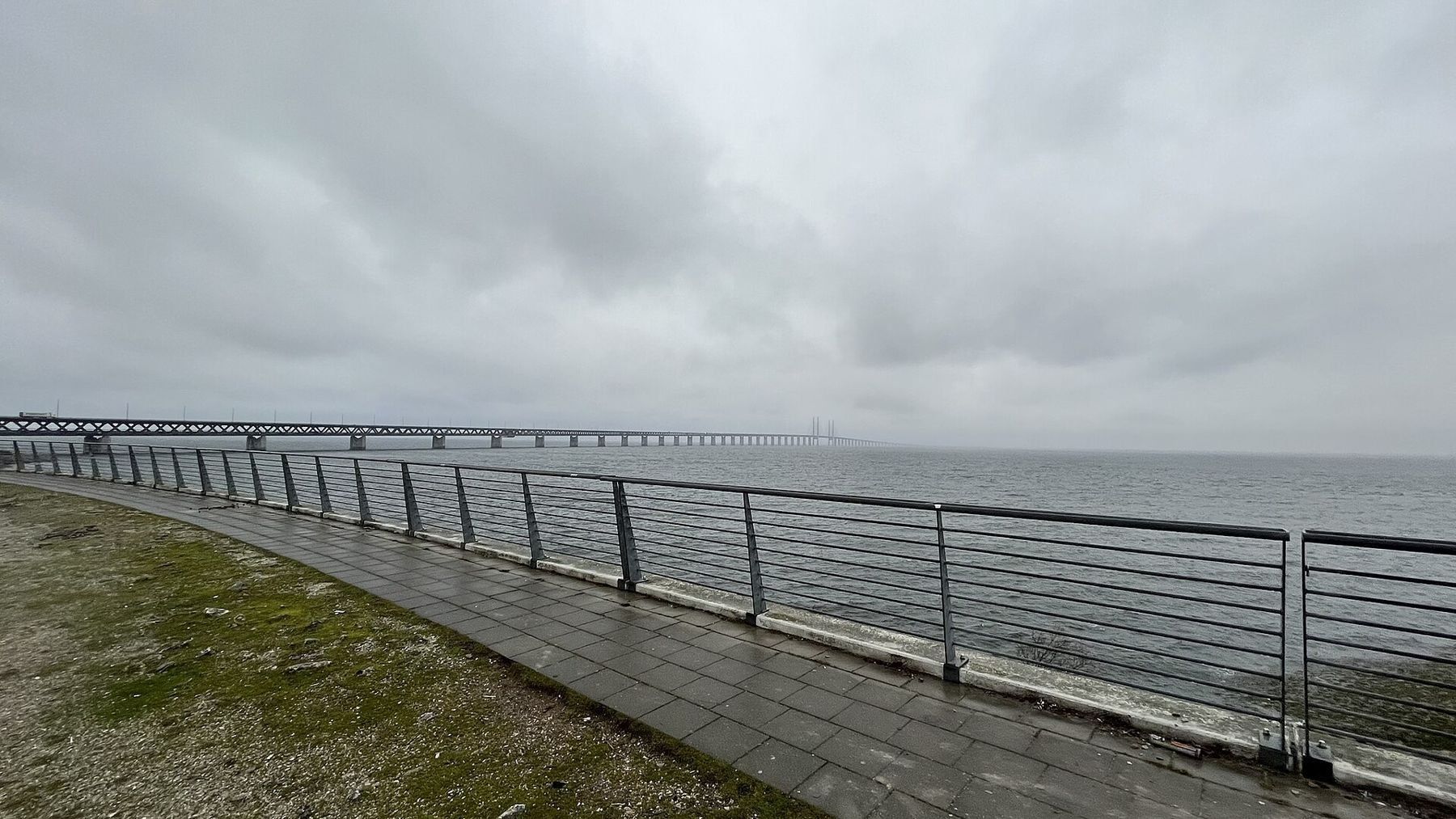
Crossing between Schengen countries usually involves no passport check at all. Countries may, however, reintroduce temporary checks at internal borders for security or migration reasons, and the crossing between Denmark and Sweden over the Øresund has seen identity checks at times. Carry your passport whenever you cross, even when you expect to wave through.
Staying beyond 90 days without another permission is an overstay. Depending on the country and the length of the overstay, the consequences can include fines, a record that affects future visa applications, removal, and a ban on re-entering the whole area for a period. There is rarely any leniency for misunderstanding the count. If illness or a cancelled flight will keep you past your limit, contact the immigration authority of the country you are in before the last day.
A visa or permission for a longer stay, such as for study or work, is a national matter for the country concerned, and it is applied for separately.
credit
Rose Abrams
CC BY 4.0
Other shared allowances
The Schengen area is the best-known example of a combined allowance, but not the only one. Some other groups of countries share entry rules or a single visitor allowance, for example the arrangement between Guatemala, El Salvador, Honduras and Nicaragua. The details differ in each case, so never assume the Schengen sum applies elsewhere.
If you are planning a long journey through Europe, also look at how you will move between countries: some rail pass trips cross several internal borders in a day, and each of those days counts the same as any other.
This is general information, not legal advice. The border agency or embassy of the Schengen country you will enter is the place to confirm the rule for your nationality and your dates.